- Department of Biotechnology
- Department of Botany
- Department of Zoology
- Department of Chemistry
- Department of Computer Science
- Department of Commerce and Business Management
- Department of English and Second Languages
- Department of Food Science and Nutrition
- Department of Geology
- Department of Microbiology
- Department of Mathematics and Statistics
- Department of Physics and Electronics
- Department of Business and Mangement(M.B.A)

Department of Microbiology
The Department of Microbiology at Vaagdevi Degree and PG College began its Undergraduate program in 1994 and its Postgraduate program in 2001. Kakatiya University, Warangal recognizes the Department of Microbiology at Vaagdevi Degree and Postgraduate College as a centre of excellence in teaching and learning Microbiology for both undergraduate and postgraduates.
The objective of the department is to pique students' interest in the social and economic implications and repercussions that microbiology has on society. The Department of Microbiology at Vaagdevi UG and PG College follows the curriculum developed by the Department of Microbiology at Kakatiya University. This curriculum is updated every five years to incorporate recent trends and contemporary methodologies.
The hands-on learning component of the curriculum is continuously updated, and students are trained in relevant and contemporary laboratory practices. Students who enroll in these programmes receive in-depth instruction and foundational knowledge in Microbiology, Biochemistry, Molecular Biology, Immunology, and Fermentation.
The department aims to be a Centre of Excellence in value-based holistic quality education, technology, environmental microbiology, agricultural microbiology, and quality control. Students at local and national levels benefit from the department’s placement assistance.
Up to this point, 24 batches of students have successfully completed their PG programme. The department has well-equipped laboratories for both undergraduate and postgraduate students with advanced equipment, computer facilities, internet access, and a well-stocked college library.
The department provides postgraduate students access to virtual lectures delivered by eminent academicians and scientists from various universities and institutions. Students greatly benefit from these programmes through interactive sessions with scientists and subject experts.
Objectives
- Enhance opportunities in research for students and faculty.
- Preserve, add to, evaluate, and transmit knowledge in the field of Microbiology.
- Prepare graduate students with in-depth knowledge and research skills for professional careers in Microbiology.
Vision
Vision to enhance our reputation as a world-class teaching and research institution which is recognized for its innovation, excellence, and discovery and attracts the best students and staff worldwide.
Mission
Our mission is to maintain a department that is regarded as equal in terms of relevance of teaching and research, quality of support and facilities, and the learning opportunities and working experience it offers. We aspire to values that are based on the highest professional growth and satisfaction offered to our staff and students.
Programs Available
- UG Programme
- PG Programme
Seminars / Conferences / Workshops
- State Level Student Meet
- MICROFEST-2K24 on 17-09-2024
- Workshop on Bioinformatics – 2024
- Guest Lecture on Bioinformatics – 2024
- A Two-Day National Conference on “Unleashing the Power of AI: Innovation, Discovery and Advancement” held on 19-09-2025 and 20-09-2025.
HOD Message
Dr. G. Chandrakala
M.Sc, B.Ed, Ph.D
It gives me immense pleasure to welcome you to the Department of Microbiology. Our department is dedicated to unraveling the fascinating world of microorganisms and applying this knowledge to education, research, and healthcare.
We strive to provide our students with a rigorous, comprehensive curriculum that combines foundational theory with extensive hands-on laboratory experience. Our goal is to equip students with the analytical skills and practical expertise necessary to excel in diagnostics, pharmaceuticals, academia, and various bio-industries.
Our esteemed faculty is actively engaged in cutting-edge research, addressing critical global challenges such as microbial diversity, disease biology, and antimicrobial resistance.
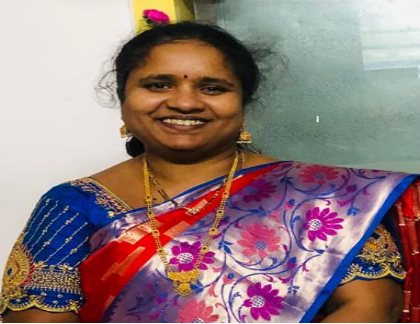
Dr. G.Chandrakala
Head of the Department
Department of Microbiology
We foster an inquisitive environment, encouraging both undergraduate and postgraduate students to participate in research projects, internships, and collaborative scientific endeavors.
Course Syllabus
List of Faculty Members / Board of Studies
| S.No | Name | Designation as per UGC |
|---|---|---|
| 1 | Dr. G. Chandrakala | Chairman |
| 2 | Syeda Ishrarth Farheen | Member |
| 2 | Dr. Sarika K. | Member |
| 2 | K. Karishma | Member |
| 3 | Dr. Hameeda Bee | Subject Expert Outside Parent University |
| 4 | Dr. G. Shyamprasad | Subject Expert Outside Parent University |
| 5 | Dr. E. Sujatha | Subject Expert |
| 6 | Dr. Shivakrishna Pabba | Expert from Industry |
| 7 | Dr. Venkataramana | Alumni Member |
| 8 | Dr. G. Renuka | Expert for Special Courses |
List of Publications
- Sumangala Rao, M. Ekanath, G. Chandrakala, D. Harish Rao, R. Venkatesh and P. Kiran (2016). Evaluation of the pharmacological activity of selected flowers used in Bathukamma - State Festival of Telangana. Amr. J. Phyt. Med. and Clin. Ther. 3: 666-678.
- Samatha, T., N. Shama, G. Chandrakala, K. Thirupathi and N. Ramaswamy (2017). Antibacterial activity of Adansonia digitata L.: A globally endangered tree. Int. J. Pharm. and Phyt. Res. 9: 1410-1413.
- Thirupathi, K., G. Chandrakala, L. Krishna, T. Bheem Rao and Y. Venkaiah (2018). Anti-bacterial activity of skin secretion and its extract of the toad Bufo melanostictus. Eur. J. Pharm. and Med. Res. 3: 283-285.
- Thirupathi, K., Ch. Shanker, G. Chandrakala, L. Krishna and Y. Venkaiah (2019). The antifungal activity of skin secretion and its extract of Indian Toad Bufo melanostictus. Int. J. Envi. Eco. Family and Urb. Stud. 9: 7-12.
- A. Srinivasa, S. Rajitha, E. Kalyan Rao, K. Sindhura, S. I. Farheen, G. Chandrakala and S. Sultana.
- Microwave-Assisted Synthesis and Evaluation of Bis[(1-benzyl-1H-1,2,3-triazol-4-yl)methyl] 7,8′-Methylenebis[2-(E)-(benzylideneamino)-4H-chromene-3-carboxylates] as Potent Antimicrobial Agents.
- Gujjeti Chandrakala, Baireddy Vijayapal Reddy and Gurram Shyam Prasad. An In Silico Approach for Molecular Targets in Candida albicans using Prodigiosin – A Bacterial Pigment for Anti-fungal Activity.
- M. Gopi Krishna, M. Narasimha Murthy, C. J. Sreelatha, K. Rajani Kumar Reddy and G. Chandrakala (2023). Sol-Gel Synthesized Copper Oxide (CuO) Nanoparticles and Their Photocatalysts and Antibacterial Applications.
- B. A. Srinivasa, G. Chandrakala, S. Ishrath Farheen, K. Sindhura and Safia Sultana (2023). Synthesis and In Vitro Anticancer Activity of Triazole Derivatives of Crassalactone.
- M. Narasimha Murthy, V. Ganesh, G. Ravinder, S. Anusha, G. Chandrakala & C. J. Sreelatha (2023). Sol–gel synthesized ZnO thin films doped with Rb and Al for self-cleaning antibacterial applications.
- Sriramoju Shamili, Kavitha Siddoju, G. Chandrakala and Sd. Ishrath Farheen (2022). Synthesis and Antimicrobial Activity of Novel (1-Phenyl-1H-1,2,3-Triazo-4-YL) Methyl 2-Acetamido 1-Phenyl-1H-Benzo[f]Chromene-3-Carboxylate.
- A. Srinivasa, S. Rajitha, E. Kalyan Rao, K. Sindhura, S. I. Farheen, G. Chandrakala and S. Sultana (2022). Microwave-Assisted Synthesis and Evaluation of Potent Antimicrobial Agents.
- B. A. Srinivasa, G. Chandrakala, S. Ishrath Farheen, K. Sindhura and Safia Sulthana (2022). Synthesis and In Vitro Anticancer Activity of Triazole Derivatives of Crassalactone.
- M. Gopi Krishna, M. Narasimha Murthy, C. J. Sreelatha, K. Rajani and G. Chandrakala (2024). Sol-Gel Synthesized Copper Oxide (CuO) Nanoparticles and Their Photocatalyst and Antibacterial Applications.
- Gujjeti Chandrakala, K.V.N. Rajeshwari and Gurram Shyam Prasad (2024). Anti-Eczema Activity of Bacterial Red Pigment Prodigiosin: An In Silico Study.
- Sarika, K., Sampath, G., Govindarajan, R. K., Ameen, F., Alwakeel, S., Al Gwaiz, H. I., et al. (2021). Antimicrobial and antifungal activity of soil actinomycetes isolated from coal mine sites. Saudi Journal of Biological Sciences, 28(6), 3553-3558.
- Gangalla, R., Sampath, G., Beduru, S., Sarika, K., Govindarajan, R. K., Ameen, F., et al. (2021). Optimization and characterization of exopolysaccharide produced by Bacillus aerophilus RK1 and its in vitro antioxidant activities. Journal of King Saud University-Science, 33(5), 101470.
- Guda, R., Battula, K. S., Muthadi, S., Kasarla, S., Palabindela, R., Korra, R., et al. (2016). Synthesis, characterization and antimicrobial investigation of Rh(III), Ru(III) and Ag(I) complexes. European Journal of Chemistry, 7(3), 334-340.
- Gangalla, R., Macha, B., Kasarla, S., Eerla, R. & Thampu, R. K. (2018). Anti-inflammatory activity of the exopolysaccharides (EPS) produced from polluted soil. Int. J. Pharm. Biol. Sci., 8, 623-631.
- Sadguna, V., Sarika, K., Komuraiah, T. R. & Mustafa, M. (2015). Anti-microbial activity of Pueraria tuberosa DC, an economically and medicinally important plant.
- Microwave-Assisted Synthesis and Evaluation of Bis[(1-benzyl-1H-1,2,3-triazol-4-yl)methyl] 7,8′-Methylenebis[2-(E)-(benzylideneamino)-4H-chromene-3-carboxylates] as Potent Antimicrobial Agents – A. Srinivasa et al.
- Synthesis and In Vitro Anticancer Activity of Triazole Derivatives of Crassalactone – B. A. Srinivasa, G. Chandrakala, S. Ishrath Farheen, K. Sindhura and Safia Sultana.
- Synthesis and Biological Assessment of Some Fused Pyran Derivatives – Sriramoju Shamili, Kavitha Siddoju, Avula Srinivas and Sd. Ishrath Farheen.
- Synthesis and Antimicrobial Activity of Novel (1-Phenyl-1H-1,2,3-Triazo-4-YL) Methyl 2-Acetamido 1-Phenyl-1H-Benzo[f]Chromene-3-Carboxylate – Sriramoju Shamili, Kavitha Siddoju, G. Chandrakala and Sd. Ishrath Farheen.
- Synthesis and Biological Assessment of Some Fused Pyran Derivatives – Sriramoju Shamili, Kavitha Siddoju, Avula Srinivas and Sd. Ishrath Farheen.