- Department of Biotechnology
- Department of Botany
- Department of Zoology
- Department of Chemistry
- Department of Computer Science
- Department of Commerce and Business Management
- Department of English and Second Languages
- Department of Food Science and Nutrition
- Department of Geology
- Department of Microbiology
- Department of Mathematics and Statistics
- Department of Physics and Electronics
- Department of Business and Mangement(M.B.A)

Department of Physics and Electronics
About The Department
Since its founding in 1993, the Department of Physics & Electronics has functioned as a hub for academic achievement in the fields of Physics and Electronics. With a strong dedication to academic advancement, scientific innovation, and career-oriented learning, the Department actively participates in providing high-quality education to both undergraduate (U.G.) and postgraduate (P.G.) students.
With a focus on Electronics, the M.Sc. (Physics) program was launched in 2006 and offers students superior theoretical understanding and hands-on experience in cutting-edge fields of contemporary Physics and Electronic Sciences. A group of highly skilled, knowledgeable, and ambitious faculty members who consistently work to foster scientific temper and advance research-based education support the department.
The Department is pleased to be the first college under Kakatiya University to use simulation-based laboratory and teaching methods, allowing students to enhance their conceptual knowledge with the use of contemporary simulation software, computational tools, and virtual experiments.
The Department successfully graduates over 300 students each academic year, many of whom are making valuable contributions to society through their professional skills in public sector organizations, industry, teaching, and research.
Through seminars, workshops, guest lectures, and value-added programs that promote students' holistic development, the Department upholds a strong academic atmosphere. The Department actively encourages candidates to prepare for national-level examinations and offers specialized training programs for CSIR-NET, UGC-NET, and other competitive examinations in order to foster competitive excellence.
Students are inspired to pursue higher education and careers in research through organized coaching, mentorship, and academic assistance. The Department is proud of its distinguished alumni who have secured important positions in leading organizations.
At ONGC, Bharat Dynamics Limited (BDL), and other reputed government and private sector organizations, many of our students currently hold executive-level positions. The Department maintains strong alumni support and significant industry engagement while expanding its academic and research activities in important areas such as Nuclear Radiation Physics and Nanomaterials.
The Department continues to remain committed to academic excellence and societal development, with the objective of producing graduates who are competent, responsible, research-oriented, and socially committed.
Vision
- To build a foundation for excellence and encourage the development of the institution as a premier center of learning by igniting and promoting enthusiasm, interest, and passion in the study of Physics and Electronics subjects.
Mission
- The Physics Department is committed to imparting quality education in both Theoretical and Experimental Physics and Electronics, with special emphasis on "Learning by Doing" for the scientific growth of the institution.
HOD's Message
It gives me immense pleasure to welcome you to the Department of Physics & Electronics, a center of scientific learning and innovation committed to academic excellence and holistic development.
Established in 1993, the department has steadily grown by offering well-structured programs in core areas of Physics and Electronics, aligned with the evolving needs of science and technology. With a strong emphasis on conceptual understanding and practical application, we strive to equip students with analytical thinking, experimental skills, and a scientific temperament essential for success in diverse professional domains.
Our department is supported by a team of dedicated faculty who adopt ICT-enabled, research-driven, and student-centric teaching methodologies. Through seminars, workshops, industrial visits, mini-projects, and hands-on learning experiences, we bridge the gap between theoretical knowledge and real-world applications.
We are equally committed to nurturing ethical values, environmental awareness, and social responsibility among students. With continuous mentoring, industry exposure, and a focus on innovation and interdisciplinary learning, we aim to shape competent professionals and responsible citizens.
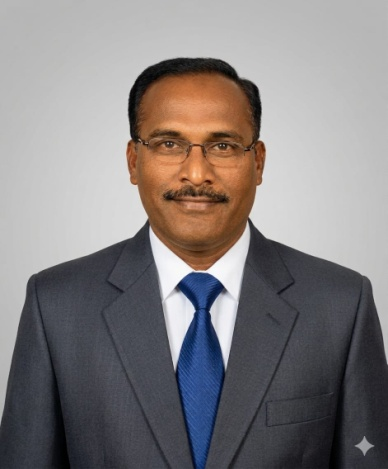
Dr. G. RAJA PRASAD
Head of the Department
Department of Physics and Electronics
I warmly invite you to be a part of this enriching academic journey and explore the exciting world of Physics and Electronics.
Board of Studies
| Name | Designation as per UGC | Details |
|---|---|---|
| Dr. G. Rajar Prasad | Chairman | Head, Department of Physics & Electronics |
| Prof. D. Haranath | Subject Expert | Professor of Physics, Department of Physics, NIT Warangal |
| Prof. A. Raju | Subject Expert | Professor of Physics & Electronics, Chaitanya Deemed to be University, Hyderabad |
| Prof. J. Sreelatha | Subject Expert | Professor in Physics, Department of Physics, Kakatiya University, Warangal |
| Dr. Sathya Kamal Chirauri | Expert from Industry | Micron Technology Inc., Hyderabad, India |
| S. Murali | Alumni Member | Deputy Manager (D&E), Bharat Electronics Limited, Machilipatnam - 521001 |
| Dr. P. Vishnu | Expert for Special Courses | Assistant Professor in Physics, Jayamukhi Institute of Technological Sciences, Narsampet, Warangal |
| Dr. M. Narasimha Murthy | Member | Assistant Professor, Department of Physics & Electronics, Vaagdevi Degree & PG College |
| Dr. Baishali Chakravarthy | Member | Assistant Professor, Department of Physics & Electronics, Vaagdevi Degree & PG College |
| G. Madhukar | Member | Assistant Professor, Department of Physics & Electronics, Vaagdevi Degree & PG College |
| M. Gopi Krishna | Member | Assistant Professor, Department of Physics & Electronics, Vaagdevi Degree & PG College |
| K. Keerthana | Member | Assistant Professor, Department of Physics & Electronics, Vaagdevi Degree & PG College |
| B. Bhavya | Member | Assistant Professor, Department of Physics & Electronics, Vaagdevi Degree & PG College |
UG / PG Programmes
| S.No. | Programme |
|---|---|
| 1 | B.Sc (Mathematics, Physics, Computer Science) |
| 2 | B.Sc (Mathematics, Electronics, Computer Science) |
| 3 | M.Sc (Physics – Electronics Specialization) |
Course Syllabus
| Programme | Semester | Course |
|---|---|---|
| B.Sc (Physics) | Semester - I | Mechanics |
| Semester - II | Thermal Physics | |
| Semester - III | Electromagnetic Theory | |
| Semester - IV | Waves and Optics | |
| Semester - V | Modern Physics | |
| Semester - VI | Electronics | |
| B.Sc (Electronics) | Semester - I | Circuit Analysis |
| Semester - II | Electronic Devices | |
| Semester - III | Analog Circuits | |
| Semester - IV | Linear Integrated Circuits and Basics of Communication | |
| Semester - V | Digital Electronics and Microprocessor | |
| Semester - VI | Microcontroller and Applications | |
| M.Sc (Physics) | Semester - I | Mathematical Physics |
| Semester - I | Classical Mechanics | |
| Semester - I | Solid State Physics | |
| Semester - I | Analog and Digital Electronics | |
| Semester - II | Statistical Mechanics | |
| Semester - II | Quantum Mechanics - I | |
| Semester - II | Integrated Circuits & Analog Modulation | |
| Semester - II | MATLAB and Applications | |
| M.Sc (Physics) - II Year | Semester - III | Quantum Mechanics - II, Nuclear Physics, Microprocessor-8086, Electronic Communication Systems |
| Semester - IV | Electromagnetic Theory and Optics | |
| Semester - IV | Molecular and Resonance Spectroscopy | |
| Semester - IV | Microcontrollers and Applications, Satellite and Mobile Communications |
Add On Courses / Certification Courses
- MATLAB and its Applications
- Crystal Structural Analysis by X-Ray Diffraction
- Nanomaterials Synthesis and Applications
- Simple Circuit Designing with Transistors
- Electrical and Electronic Measuring Instruments
- Simple Circuit Designing with Transistors
- Domestic Electrical Wiring
- Electrical and Electronic Measuring Instruments
- Maintenance of Modern Equipment in Physics
- Integrated Circuits and their Applications
- Domestic Electrical Wiring
- Basics of Repairing Home Appliances
- Adobe Photoshop
Faculty
| S.No. | Name of the Faculty | Qualification | Designation |
|---|---|---|---|
| 1 | Dr. G. Rajaprasad | M.Sc., Ph.D | Associate Professor of Physics / HOD |
| 2 | M. Narasimha Murthy | M.Sc., Ph.D, SET | Assistant Professor of Physics |
| 3 | M. Gopi Krishna | M.Sc., (Ph.D) | Assistant Professor of Physics |
| 4 | G. Ramesh | M.Sc. | Assistant Professor of Physics |
| 5 | K. Narsimha | M.Sc., B.Ed | Assistant Professor of Physics |
| 6 | Azeeza Khatoon | M.Sc., B.Ed | Assistant Professor of Physics |
| 7 | P. Rajani | M.Sc., B.Ed., B.Li.Sc | Assistant Professor of Physics |
| 8 | B. Bhavya | M.Sc. | Assistant Professor of Physics |
| 9 | T. Gopal | M.Sc. | Assistant Professor of Physics |
| 10 | H. Navya | M.Sc. | Assistant Professor of Physics |
| 11 | S. Laxmi Lavanya | M.Tech | Assistant Professor of Physics |
Department Activities / Club Activities
- Science Fair for Social Awareness and Innovation: The Department hosts a Science Fair where students create and display models that address real-world problems, including prevention of electrical short circuits, fire incidents, and other socially relevant issues.
- Alumni Interaction for Career Guidance and Mentorship: The Department of Physics & Electronics regularly organizes interaction sessions with distinguished alumni to provide students with career guidance, industry insights, and mentorship.
- Student Engagement in Social Awareness and Community Outreach: As part of its commitment to holistic development and civic engagement, the Department actively encourages students to participate in social awareness programmes. Through paintings, public speeches, and community outreach activities, students engage in campaigns related to blood donation, voter awareness, and gender equality.
MOUs
To encourage cooperative teaching, learning, and research endeavors, the Department of Physics & Electronics has established active Memoranda of Understanding (MoUs) with reputed academic institutions.
- Academic exchange, collaborative seminars, and student enrichment initiatives are facilitated through a formal Memorandum of Understanding with University Arts & Science College, Kakatiya University, Hanamkonda.
- The Department actively collaborates with Kakatiya Government Degree College, Hanamkonda to enhance faculty engagement, interdisciplinary learning, and joint academic activities.
- A strategic Memorandum of Understanding has been established with Telangana Social Welfare Residential Degree College for Women to support inclusive education, research collaboration, and faculty and student capacity-building initiatives.
Faculty Achievements (Only From Recognized Bodies)
Dr. G. RajaPrasad
- Dr. G. RajaPrasad acted as the Convener of the International Conference “Advances in Nanotechnology-2021” organized by the Department of Physics & Electronics, Vaagdevi Degree & PG College (A).
- Received the Best Teacher Award during the Silver Jubilee Celebrations of Vaagdevi Degree & PG College in March 2017.
Dr. M. Narasimha Murthy
- Received Kakatiya University 5th Rank in M.Sc. (Physics) at University Level for the Academic Year 2001-03.
- Received the Best Teacher Award on the occasion of Vaagdevi Degree & PG College Annual Day Celebrations – 2026.
- Received an Incentive Cash Prize for being an Active Researcher.
- Received a Certificate of Appreciation as an “Active SPOC – NPTEL Local Chapter” from NPTEL SWAYAM.
Publications
Publications of Dr. G. RajaPrasad
- Published several research articles in reputed National and International Journals.
- Presented a research paper in the Solid State Symposium Proceedings.
- Presented a research paper at the National Conference on Advanced Materials in Nanoscience hosted by Kakatiya University in 2024.
- Presented a paper at the National Conference “Advances in Solid State Materials” organized by Andhra University, Nuzvid PG Centre, Krishna District in December 2004.
- Presented a paper at the National Conference “Advances in Thermo Nuclear Materials and Utilities” organized by Osmania University, Hyderabad in September 2002.
- Presented a research paper at the International Conference on Advances in Radiation and Materials organized by the University of Mysore in October 1999.
Publications of Dr. M. Narasimha Murthy
| S.No. | Publication Title |
|---|---|
| 1 | Self-protective Antibacterial and Hydrophobic ZnO Thin Film Coatings (Indian Journal of Pure & Applied Physics - SCIE Indexed Journal) |
| 2 | Sol–gel Auto Combustion Synthesis of ZnO Nanoparticles Fabricated with Eucalyptus Honey and Longan Honey as Combustion Fuels for Water Treatment (Chemical Papers - SCI Indexed) |
| 3 | Impact of Blending of Solvents on Structural and Surface Morphological Properties of Sol-Gel Synthesized ZnO Nano Thin Films (Rasayan Journal of Chemistry - Scopus Indexed) |
| 4 | Sol-Gel Synthesized ZnO Thin Films Doped with Rb and Al for Self-Cleaning Antibacterial Applications (Journal of Sol-Gel Science and Technology - SCI Indexed) |
| 5 | Fabrication and Impact of Fe and Al Co-Doping on ZnO Nanostructured Thin Films Developed by Arduino-Based Spin Coating Device (Materials Today Proceedings - Scopus Indexed) |
| 6 | Effect of Solution pH on Structural, Surface Morphological and Optical Characteristics of ZnO Thin Films Synthesized by Chemical Bath Deposition Technique (Materials Today Proceedings - Scopus Indexed) |
| 7 | Designing Low-Cost Arduino Powered Spin Coater for Thin Film Deposition (Advanced Materials Research - UGC Care Group-I) |
| 8 | Study of Structural, Morphological, Optical and Luminescence Properties of Nickel Oxide Thin Film Synthesized by Dip-Coating Technique (Materials Today Proceedings - Scopus Indexed) |
| 9 | Effect of Annealing Temperature Variation on Al-Doped Nickel Oxide Thin Film Synthesized by Dip-Coating Technique (Solid State Phenomena - Scopus Indexed) |
| 10 | Sol-Gel Synthesized Copper Oxide (CuO) Nanoparticles and Their Photocatalyst and Antibacterial Applications (Rasayan Journal of Chemistry - Scopus Indexed) |
Publications of M. Gopi Krishna
| S.No. | Publication Title |
|---|---|
| 1 | Sol-Gel Synthesized Copper Oxide (CuO) Nanoparticles and Their Photocatalyst and Antibacterial Applications (Rasayan Journal of Chemistry - Scopus Indexed) |
| 2 | Self-protective Antibacterial and Hydrophobic ZnO Thin Film Coatings (Indian Journal of Pure & Applied Physics - SCIE Indexed Journal) |
| 3 | Sol–gel Auto Combustion Synthesis of ZnO Nanoparticles Fabricated with Eucalyptus Honey and Longan Honey as Combustion Fuels for Water Treatment (Chemical Papers - SCI Indexed) |
Best Practices
Adoption of NPTEL MOOCs for Quality Enhancement in Teaching–Learning
- The Department of Physics & Electronics at VDPGC (A) promotes continuous learning through NPTEL Certificate Courses.
- Dr. M. Narasimha Murthy achieved Elite with Silver Certifications in:
- Experimental Nanobiotechnology
- Structural Analysis of Nanomaterials
- M. Gopi Krishna completed the online course on Structural Analysis of Nanomaterials.
- Eighteen final-year B.Sc. students participated in a Student Training Programme (STTP) on “eSim Circuit Simulation” organized in collaboration with IIT Bombay Spoken Tutorial and IQAC during August 2025.
Simulation-Based Learning for Technical Skill Development
As a best practice, the Department of Physics & Electronics utilizes simulation-based learning to improve students' conceptual understanding and practical skills. Software tools such as MATLAB, Keil µVision, and MultiSim 8 Pro are extensively used for teaching technical concepts.
Structured Industrial Visit Program for Bridging Academia–Industry Gap
To bridge the gap between theoretical knowledge and industrial practice, the Department of Physics & Electronics at VDPGC (A) organizes structured industrial visits to renowned industrial and technological establishments including:
- Electric Loco Shed, Kazipet
- Kakatiya Thermal Power Station, Bhupalpally, Jayashankar District
- Heavy Water Plant, Manuguru